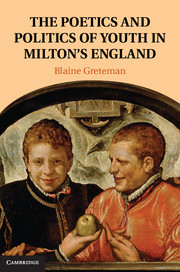
 My own kids head off to their first day of school tomorrow...and my book about children and the history of using literature to educate them just came out today. How's that for a segue? And how's this for a marketing pitch, oh loyal reader (for I suspect you are fit, though very few)? Cambridge University Press has given me a link to a 20% discount code for the book, which you can find here. That's right -- using that link, the book will only run you a cool $76! It's not cheap, but if you buy a copy, and bring it to me, I will sign it with my standard-issue Renaissance-scholar feather quill.
 Tuesday, August 20, 2013
School's in, Book's Out!
My own kids head off to their first day of school tomorrow...and my book about children and the history of using literature to educate them just came out today. How's that for a segue? And how's this for a marketing pitch, oh loyal reader (for I suspect you are fit, though very few)? Cambridge University Press has given me a link to a 20% discount code for the book, which you can find here. That's right -- using that link, the book will only run you a cool $76! It's not cheap, but if you buy a copy, and bring it to me, I will sign it with my standard-issue Renaissance-scholar feather quill. 
Thursday, August 15, 2013
Cloudy With a Chance of Pain...
 |
| Illustration from our article in THE, August 15, 2013 |
I have a new article on MOOCs in today's Times Higher Education.
This was a new kind of publication for me -- I co-wrote it with my old friend from Oxford, David Roberts, who now works in international development for the U.S. Government. It started off as a brainstorming session about where MOOCs could take the university, then evolved into a Swiftian satire of higher ed, and then finally took its printed form as an opinion piece. As it makes it clear, MOOCs still have a lot to learn -- but we also think they could add a nice shot of innovation to a system that could use it.
The process of writing it, on the other hand, was another confirmation of an idea my network research has been emphasizing a lot: that authorship is nearly always complex, multiple, and in some ways bureaucratic, rather than singular and romantic!
Friday, August 9, 2013
Amazon.edu
(cross posted at Stanford CMEMS)
I seem to have a special skill for choosing doomed professions.
In my first real job, I was a journalist, writing for Time magazine in London, and each Monday we'd eagerly check out the news stands on the Strand so we could see how our cover stacked up against our chief competitor, Newsweek.
Now Newsweek exists only as a digital ghost, sold yet again, last week, to a new machine, while the magazine's former owner, The Washington Post, has been snapped up by Amazon.com founder Jeff Bezos.

I got out just in time, leaving the newsroom for the classroom while Jeff Bezos still looked like a loveable Muppet rather than a demented bond villain.

Now MOOCs threaten to do to universities what Amazon and Co. did to print. In a previous blog, I suggested that the humanities needed to go local to survive and thrive in the age of MOOCs. Since then, I've taught a Shakespeare class that was essentially an anti-MOOC. It was tiny, rather than massive. It was local rather than global. And we mostly went offline and into the archives, the theatre, and the workshop, to understand how Shakespeare's works continue to live in our communities.
These are my reflections on what happened, what worked, what could be improved, and why such a model will be more necessary than ever once Amazon.edu starts granting degrees.
A little background: I've taught study abroad classes at Cambridge and Oxford, and I always tried to root them deeply in a sense of place, so that we weren't simply transplanting a class from a U.S. campus to a more distant one. As a student, though, I never really had the money to take such trips, and so this summer, I had an idea: what if I offered the equivalent of a study abroad trip right here in Iowa City, where I teach at the University of Iowa? The class would be Shakespeare -- but we would try to study Shakespeare in a way he could only be studied here.
So we read the plays -- but rather than spending all our time in the classroom discussing them, we spent most of our time learning about how they lived in our community. When we read Romeo and Juliet, we took a trip to the University's Center for the Book, where we met Emily Martin, a book artist whose pop-up edition of the play won a prize this summer at the Designer Bookbinders International Competition, hosted by Oxford's Bodleian Library. Emily showed my students how to make a book, and they asked her questions about why she chose Romeo and Juliet, what it meant to her, and how she interpreted certain key moments. When we read The Merchant of Venice, we visited the Iowa Women's Archives, where my students found evidence from the various early 20th century Women's Shakespeare Clubs who had read the play, and how their readings changed before and after World War II. For Hamlet, we held a round table discussion with the director and actors of the local Summer Shakespeare Festival, who were staging the play and who were still working through interpretive issues in their rehearsals. For other plays, we visited Special Collections to look at early editions and fine press republications, and along the way my students made some fantastic discoveries, some entirely unrelated to Shakespeare.
At the library of Salisbury House, in Des Moines, for example, we found a first edition of Newton's Optics, annotated by his contemporary and fellow Royal Society member John Harris.

(courtesy Salisbury House, Des Moines, IA)
The class worked beautifully for keeping the students, and their professor, engaged and inquiring. With finds like the Newton edition, it probably also worked as my most effective integration of research and teaching.
And this was enhanced by collaborative projects, such was a class wiki page where we documented our findings and maintained our bibliography (I pulled these photographs off the Wiki page, where my students had curated them).

(courtesy Salisbury House, Des Moines, IA)
This is also where I saw some room for improvement. In teaching the class again, I would want to make the collaborative class project a larger part of the grade and the focus. But this requires establishing criteria for grading and evaluation that are far outside our normal paradigms. I can usually spot an A paper, or a C, within the first few paragraphs. But evaluating a student's contribution to a wiki page or a visit to the archives is a good deal trickier. Grading, I think, might need to shift to a more holistic portfolio approach -- such as some honors programs have already implemented -- and I'll admit that I'm not exactly sure how that would work. Finally, a class like this really needs to be made anew each year; it is impossible to work from a standard syllabus if you must organize interviews, round table discussions, and artist visits, because even within a single community the available resources will constantly change.
That would be a challenge. But if faculty really are going to argue that what we do can't be replaced by a massive, standardized, computer class, it is probably time to put up or shut up. In short, most of us already do some version of this localized, anti-MOOC teaching every time we lead a robust class discussion. But going forward we will actually probably need to work a lot harder to make sure what happens in our classes really can't happen anywhere else.
I seem to have a special skill for choosing doomed professions.
In my first real job, I was a journalist, writing for Time magazine in London, and each Monday we'd eagerly check out the news stands on the Strand so we could see how our cover stacked up against our chief competitor, Newsweek.
Now Newsweek exists only as a digital ghost, sold yet again, last week, to a new machine, while the magazine's former owner, The Washington Post, has been snapped up by Amazon.com founder Jeff Bezos.

I got out just in time, leaving the newsroom for the classroom while Jeff Bezos still looked like a loveable Muppet rather than a demented bond villain.
Now MOOCs threaten to do to universities what Amazon and Co. did to print. In a previous blog, I suggested that the humanities needed to go local to survive and thrive in the age of MOOCs. Since then, I've taught a Shakespeare class that was essentially an anti-MOOC. It was tiny, rather than massive. It was local rather than global. And we mostly went offline and into the archives, the theatre, and the workshop, to understand how Shakespeare's works continue to live in our communities.
These are my reflections on what happened, what worked, what could be improved, and why such a model will be more necessary than ever once Amazon.edu starts granting degrees.
A little background: I've taught study abroad classes at Cambridge and Oxford, and I always tried to root them deeply in a sense of place, so that we weren't simply transplanting a class from a U.S. campus to a more distant one. As a student, though, I never really had the money to take such trips, and so this summer, I had an idea: what if I offered the equivalent of a study abroad trip right here in Iowa City, where I teach at the University of Iowa? The class would be Shakespeare -- but we would try to study Shakespeare in a way he could only be studied here.
So we read the plays -- but rather than spending all our time in the classroom discussing them, we spent most of our time learning about how they lived in our community. When we read Romeo and Juliet, we took a trip to the University's Center for the Book, where we met Emily Martin, a book artist whose pop-up edition of the play won a prize this summer at the Designer Bookbinders International Competition, hosted by Oxford's Bodleian Library. Emily showed my students how to make a book, and they asked her questions about why she chose Romeo and Juliet, what it meant to her, and how she interpreted certain key moments. When we read The Merchant of Venice, we visited the Iowa Women's Archives, where my students found evidence from the various early 20th century Women's Shakespeare Clubs who had read the play, and how their readings changed before and after World War II. For Hamlet, we held a round table discussion with the director and actors of the local Summer Shakespeare Festival, who were staging the play and who were still working through interpretive issues in their rehearsals. For other plays, we visited Special Collections to look at early editions and fine press republications, and along the way my students made some fantastic discoveries, some entirely unrelated to Shakespeare.
At the library of Salisbury House, in Des Moines, for example, we found a first edition of Newton's Optics, annotated by his contemporary and fellow Royal Society member John Harris.
(courtesy Salisbury House, Des Moines, IA)
The class worked beautifully for keeping the students, and their professor, engaged and inquiring. With finds like the Newton edition, it probably also worked as my most effective integration of research and teaching.
And this was enhanced by collaborative projects, such was a class wiki page where we documented our findings and maintained our bibliography (I pulled these photographs off the Wiki page, where my students had curated them).
(courtesy Salisbury House, Des Moines, IA)
This is also where I saw some room for improvement. In teaching the class again, I would want to make the collaborative class project a larger part of the grade and the focus. But this requires establishing criteria for grading and evaluation that are far outside our normal paradigms. I can usually spot an A paper, or a C, within the first few paragraphs. But evaluating a student's contribution to a wiki page or a visit to the archives is a good deal trickier. Grading, I think, might need to shift to a more holistic portfolio approach -- such as some honors programs have already implemented -- and I'll admit that I'm not exactly sure how that would work. Finally, a class like this really needs to be made anew each year; it is impossible to work from a standard syllabus if you must organize interviews, round table discussions, and artist visits, because even within a single community the available resources will constantly change.
That would be a challenge. But if faculty really are going to argue that what we do can't be replaced by a massive, standardized, computer class, it is probably time to put up or shut up. In short, most of us already do some version of this localized, anti-MOOC teaching every time we lead a robust class discussion. But going forward we will actually probably need to work a lot harder to make sure what happens in our classes really can't happen anywhere else.
Wednesday, July 17, 2013
De Doctrina Mellifera
Initially, one of the most initially terrifying components of my degree at Oxford was the prospect of working with John Carey -- the legendary Merton Chair of English who translated Milton's De Doctrina Christiana and wrote books on John Donne and many others. Fortunately this was only terrifying until our first meeting, where I found him warm and helpful -- if a little bemused by the ragged and jet-lagged Okie who had wandered into his office. He eventually became my thesis supervisor, and for years now I've enjoyed the chance to catch up with him on return trips to England, where I hear about the next book he will publish (forthcoming fall 2013: a memoir). He has always been a model of academic engagement that is never narrow, that always pushes past the little bubble that always threatens to engulf your life when you find yourself writing about seventeenth-century hermeticism or the Socinian heresy.
But until this summer, I've never had a chance to visit his home from home, the cottage in the Cotswolds where he maintains a fantastic garden and keeps bees. And so, until this summer, I didn't know of his fantastic double life as a purveyor of fine foods!
.JPG)
But until this summer, I've never had a chance to visit his home from home, the cottage in the Cotswolds where he maintains a fantastic garden and keeps bees. And so, until this summer, I didn't know of his fantastic double life as a purveyor of fine foods!
.JPG)
If you look closely at the label of that "Cotswold Honey," you'll see it's produced by author of John Donne: Life, Mind, and Art, and William Golding: The Man Who Wrote the Lord of the Flies. John tells me he produces around 200 pounds of honey in a good year, and his garden is truly a thing to behold -- far from the weedy, Darwinian survival of the fittest that goes on in my plot.
Eat your heart out, Harold Bloom!
Friday, June 21, 2013
Summer of Shakespeare
 It seems everyone's talking and writing about Josh Whedon's Much Ado About Nothing, so I got into the act too, with my colleague Adam Hooks. You can find our discussion about Shakespeare, Superheroes, and Sequels, here.
In any event, it has been very much a summer of Shakespeare for me. I've just finished a summer course with the theme "Study Abroad in Iowa," which took us around the state and the town, meeting book artists, curators, and actors. And we discovered the all important Grant Wood connection!
No, not THAT, Grant Wood connection ---->
But a real one: Grant Wood designed the original entrance to the Shakespeare Garden in Marion, Iowa (now part of Cedar Rapids). Unfortunately, the pavilion he designed is gone -- but the garden is still there, as one of my fantastic students discovered for herself, with a project documenting Shakespeare's flora.
Tuesday, May 14, 2013
A Blog About Crayfish, Bacon, and Wine (But not about Food)
(crossposted at Stanford University CMEMS)
I hate the name "locavore," perhaps because
its so often used by foodies -- who generally seem to me like slimmed
down versions of Ben Jonson's Sir Epicure Mammon. But in principle, as
another character in Jonson's play notes, "the motion's good, and of the
spirit." And if locally sourced food is a good idea, then why not
locally sourced scholarship too?
For the last
few years, at least, that's been my principle, and so while I continue
to make my yearly pilgrimage to the British Library and Bodleian, I also
try never to miss an opportunity to duck into libraries and special
collections that lie off the beaten path.
This partly reflects Thoreau's
idea that we should be "the Lewis and Clark and Frobisher of [our] own
oceans." I've written about how this has inflected my teaching of
Shakespeare, because such collections allow us to understand how such
authors have shaped the histories of our institutions and communities.
But beyond this, it really is possible to find hidden treasures in
smaller, regional collections. Such collections were often cobbled
together with limited resources, meaning that the books are less likely
to be the pristine copies we're used to seeing in the Bodleian, and more
likely to be battered, well-used, and bibliographically more
interesting.
 |
| [Fig. 1: Courtesy of Special Collections, LSU Libraries, Louisiana State University] |
So
when I was giving a talk at LSU recently, I made my way over to the
lovely Hill Memorial Library, where the collections did not disappoint
on either local or bibliographical interest. Where but Baton Rouge could
one find "The Rendell Rhoades Crayfish Collection?" And what, pray tell,
would one find in said collection?
The answer,
in short, is that the collection holds basically every book that's ever
mentioned a crayfish, crocodile, or crustacean, from (pseudo?) Ovid's
fragmentary poem on the art of fishing, Halieutica, in a lovely 1556 edition, to Francis Bacon’s Sylva Sylvarum
(1651). Rhoades was an aquaculture pioneer and obviously something of
an eccentric (he also collected thousands of books on croquet, which are
held at the Rutherford B. Hayes Presidential Center, in Ohio).
 |
| [Fig. 2: Conrad Gessner, Halieuticon, hoc est De piscibus libellus, multo quam ante hac emendatior & scholijs illustratus (Zurich, 1556), title page, Courtesy of Special Collections, LSU Libraries, Louisiana State University] |

[Fig. 3: Conrad Gessner, Halieuticon, hoc est De piscibus libellus, multo quam ante hac emendatior & scholijs illustratus (Zurich, 1556), sig. F3v, Courtesy of Special Collections, LSU Libraries, Louisiana State University]
On a side note, "crocodili" is the closest the book comes to the gators that I was told, by my gracious but perhaps malingering hosts, inhabit the University Lakes. Who knows: they do have a tiger, which you can watch here.

[Fig. 4: Conrad Gessner, Halieuticon, hoc est De piscibus libellus, multo quam ante hac emendatior & scholijs illustratus (Zurich, 1556), sig. B3v, Courtesy of Special Collections, LSU Libraries, Louisiana State University]
Bacon's Sylva Sylvarum also made the collection for its brief discussion of whether crustaceans were insects or fish.

[Fig. 5: Francis Bacon, Sylva Sylvarum (London, 1651), 189, Courtesy of Special Collections, LSU Libraries, Louisiana State University].
A book on the subjectivity and sexuality of early modern crayfish would seem to be in order. But the most interesting thing about the Bacon volume had nothing to do with crustaceans or fish of any kind. The Bacon book is well used -- it contains pasted-in pages, some torn pages, and a big, bold, stain:

[Fig. 6: Francis Bacon, Sylva Sylvarum (London, 1651), 9, Courtesy of Special Collections, LSU Libraries, Louisiana State
University].
What is that? I might normally guess ink, except there are no ink marks anywhere else in the volume -- no sign that a reader was pouring over it with pen poised. Might the text itself offer a clue? Here, Bacon describes an experiment in which one sets a candle inside a shallow bowl of "spirit of wine," or aqua vita -- probably a highly distilled, and flammable, brandy. This allows Bacon to observe the effect of one flame upon another. And did a reader, following along at home, replicate the experiment? Perhaps I'm being fanciful, but I can't help but think that stain looks about right for a drop of distilled wine, hurriedly wiped from the page (the wipe mark goes down and from left to right, so that the stain tapers off at the word "remains").
Besides being of obvious local interest, in other words, the Rhoades Crayfish Collection is also a great resource in the history of sixteenth- and seventeenth-century science, perhaps offering us a chance to see how books not only recorded that history, but participated in it.
Thanks very much to all the fantastic people in the LSU English Department, and the Department of Women's and Gender Studies, for showing me such a fantastic time!
Thursday, April 4, 2013
The End of Affirmative Action as We Know it? (And I Feel Ambivalent)
 This Spring the Supreme Court will rule on two affirmative action cases that may end affirmative action as we know it. For those of us unabashedly liberal professorial types committed to increasing diversity on college campuses and reducing inequality in our educational system, this may in fact be a moment of great opportunity, as I argue at The New Republic.
 In the classroom as in the courts: never waste a crisis!
Wednesday, March 13, 2013
Why the Humanities Must Go Local in a Global Age
(Cross posted at Stanford CMEMS)
Why, in the age of MOOCS and the Internet, should students continue to enroll in my courses and others like them? Why pay tuition for a Shakespeare class at Iowa when professor from a shiny Ivy league school will teach it to you for free? These were some of the questions I tried to answer this weekend at the first Annual Des Moines Humanities Festival at Salisbury House in Des Moines. It was a great day, with Jim Leach, a native Iowan and the chairman of the NEH, in attendance to discuss his own education in the humanistic three-R's ("In Iowa," he deadpanned, "that's readin', writin', and wrastlin'").
 |
| [Courtesy University of Iowa Women's Archive] |
So
it seems inevitable that students wanting such an education will soon
seek it online. But before humanities professors pack up our jalopies
and head to California, like John Steinbeck's Joads did after the
tractor took their land, I suggested that we might take another lesson
from the family farm -- which has recently found new life thanks to the
booming "locavore" movement taking root in restaurants and farmer's
markets across the country.
When teaching
Shakespeare, for example, what can we offer locally that's totally
unique? The answer goes to the nature of the humanities themselves,
sending us into the archives, not in search of some unchanging
Shakespeare whose "eternal summer shall not fade," but in search of a
Shakespeare that has put down roots, and grown, in the Iowa soil.
As
an exercise in discovering this local Shakespeare, I'm teaching a class
this summer called "Study Abroad -- in Iowa," in which students will
research the local archives, curate exhibitions on their findings, and
hold panel discussions with local book artists and performers who draw
on Shakespeare's work. To get some idea of the kinds of materials they'd
be working with, I took my own trip to the University of Iowa Special
Collections, where I pulled up various works, old an new.
Above, for example, is a picture of the scrapbook of the Marion, Iowa, Shakespeare Club, founded in the 1890s for the "Intellectual improvement" of Marion's citizens.
The
women, who hailed Shakespeare as "The Bard of the Cornfields," gathered
to have tea, to read Shakespeare, discuss the plays, and compose their
own original poems, as well as debating the duties of citizenship. In
other words, Shakespeare was (and is) part of their broader civic
engagement.
Eventually, club members built a
“Shakespeare Garden” in Marion’s Ellis park, which became a focal point
for community restoration efforts after the historic floods of 2008. In a
newspaper article about the rebuilding, one club member said that the
group had moved away from their original insistence on plants that grew
in Shakespeare's own garden in Stratford, and that their plantings now
included flowers that thrive more readily in Iowa's own climate.
Here's another example of a locally remade Shakespeare, by the book artist Emily Martin.
 [Courtesy University of Iowa Special Collections]
This is an edition of Romeo and Juliet, but
as you see in the picture below, it is an unusual one. Martin
specializes in pop up books, and here she's chosen one line of text
selected to represent each act of the play.

[Courtesy University of Iowa Special Collections]
On these side leaves (the pillars of the castle) we find variations of the Chorus' opening lines:
Two households, both alike in dignity
In fair Verona where we lay our scene.
From ancient grudge to break new mutiny
Where civil blood makes civil hands unclean. (1-4)
As
she moves through the play, Martin inserts modern equivalents for
Verona: "fair Bosnia," "fair Israel," "fair Rwanda," "fair America," as
well as her own commentary.
In brief, I hope to
facilitate such experiences of adaptation and reclamation for my own
students, too. With our emphasis on historicizing and analyzing early
modern works, scholars like myself sometimes hesitate to embrace such
heritage, or fail even to see it. But taking our students into the
archives in this way can help demonstrate the great insight of
humanism and the humanities -- that when we're reading Shakespeare we're
not really processing information (in a way that we can broadcast over
the web) so much as discovering ourselves and our relationship to
others, past, present, and future.
Tuesday, March 5, 2013
First Annual Des Moines Humanities Festival

I'll be talking about the way Iowans have read, collected, and remade Shakespeare from some of the earliest settlers to 2012, when Iowa City book artist Emily Martin produced a fantastic pop-up version of Romeo and Juliet to enter in a bookbinding competition sponsored by Oxford University's Bodleian Library. If you happen to be in Des Moines -- and why wouldn't you be!? -- you should get a ticket and check out the festival, which includes a lunch, reception, and brilliant talks by all us "big thinkers" (as the Register describes the speakers!).
Monday, February 18, 2013
Hell is for Commuters and Kings
 "I can smile, and smile, and park while I smile" -- those, or something like them, were the famous words of Shakespeare's villain Richard III. As you may have heard, archaeologists recently discovered his bones under a municipal parking lot in England, and I've just co-written a newspaper article with Jeff Porter and Adam Hooks, my colleagues at Iowa, on the discovery here!
Subscribe to:
Posts (Atom)